1. Du är här:
  2. Fysikum
  3. Research

Research divisions at the Department of Physics

Research within experimental as well as theoretical physics is done at the Department of Physics. The research is organised in seven research divisions. Research projects are often realised as collaborations between research divisions, or in collaboration with external Swedish or international groups.

Each research division has its own web site where you can find more information.

The present divisional structure came into force on 1 October 2011, when the seven research divisions were formed out of the eleven previous research groups.

  • Artiklar i denna avdelning:
  • Atomic Physics

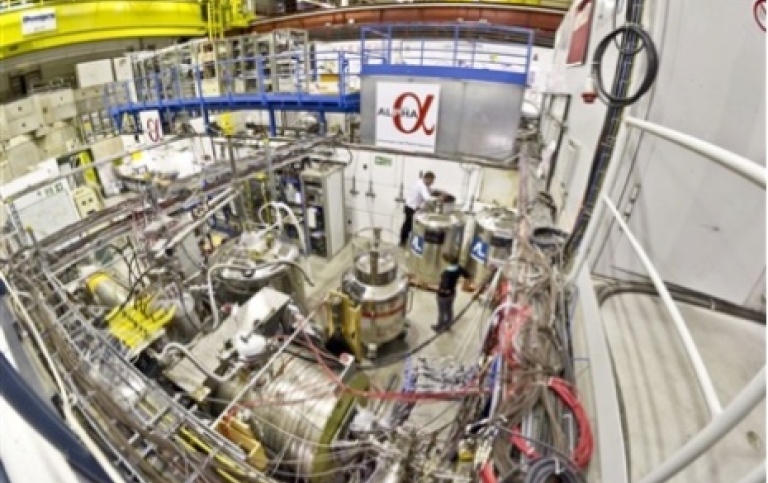
    The division studies atomic properties and various atomic collision processes both experimentally and theoretically. In the experimental activities we use advanced sources and traps for ions (DESIREE and S-EBIT) together with electron beams, laser-light and various targets. The research connects to applications in astrophysics and plasma physics, as well as to technical applications.
  • Chemical Physics

    The activities at the division comprise theoretical and experimental approaches to molecular structure and fundamental processes in a wide variety of contexts - from properties of isolated molecules and pure water to astrobiology, heterogenous catalysis and energy conversion devices.

  • Condensed Matter and Quantum Optics

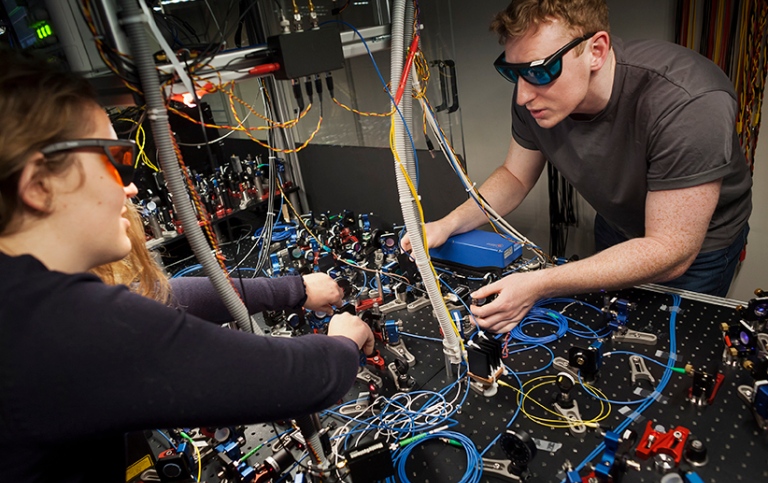
    The research of the division of Condensed Matter and Quantum Optics is both experimental and theoretical. The research focuses on the fundamental aspects of quantum phenomena in light and matter, and has several potential applications in quantum information technology, quantum electronics and nanotechnology. Theoretical work is going on also in other areas of physics.

  • Cosmology, Particle Astrophysics and String Theory, CoPS

    The activities of the CoPS involve many aspects of theoretical and experimental particle astrophysics, observational and theoretical cosmology, the use of supernovae and gravitational lensing to measure cosmological parameters, models for dark matter, and string theory.
  • Elementary Particle Physics

    The division is active in experimental particle- and astroparticle physics, primarily within the ATLAS and IceCube experiments. Current activities include the search for supersymmetric particles and studies of neutrinos of cosmological origin.
  • Instrumentation Physics

    Instrumentation Physics is one of the new divisions that were formed when the new divisional structure came into force on 1 October 2011. The activities within this new division were earlier performed mainly within the three previous research groups Manne Siegbahn Laboratory, Nuclear Physics and System and Instrumentation Physics.

    Links to the web sites of the included Manne Siegbahn Laboratory, Nuclear Physics and System and Instrumentation Physics groups are found on the web page of the division.

  • Medical Radiation Physics

    The research of the divison is focused mainly on radiotherapy optimization, and several of the ongoing projects are linked to the racetrack microtron at the Karolinska Hospital, Department of Hospital Physics, and a planned facility for radiotherapy with light ions. There are also some ongoing research in the fields of nuclear medicine and magnetic resonance imaging.